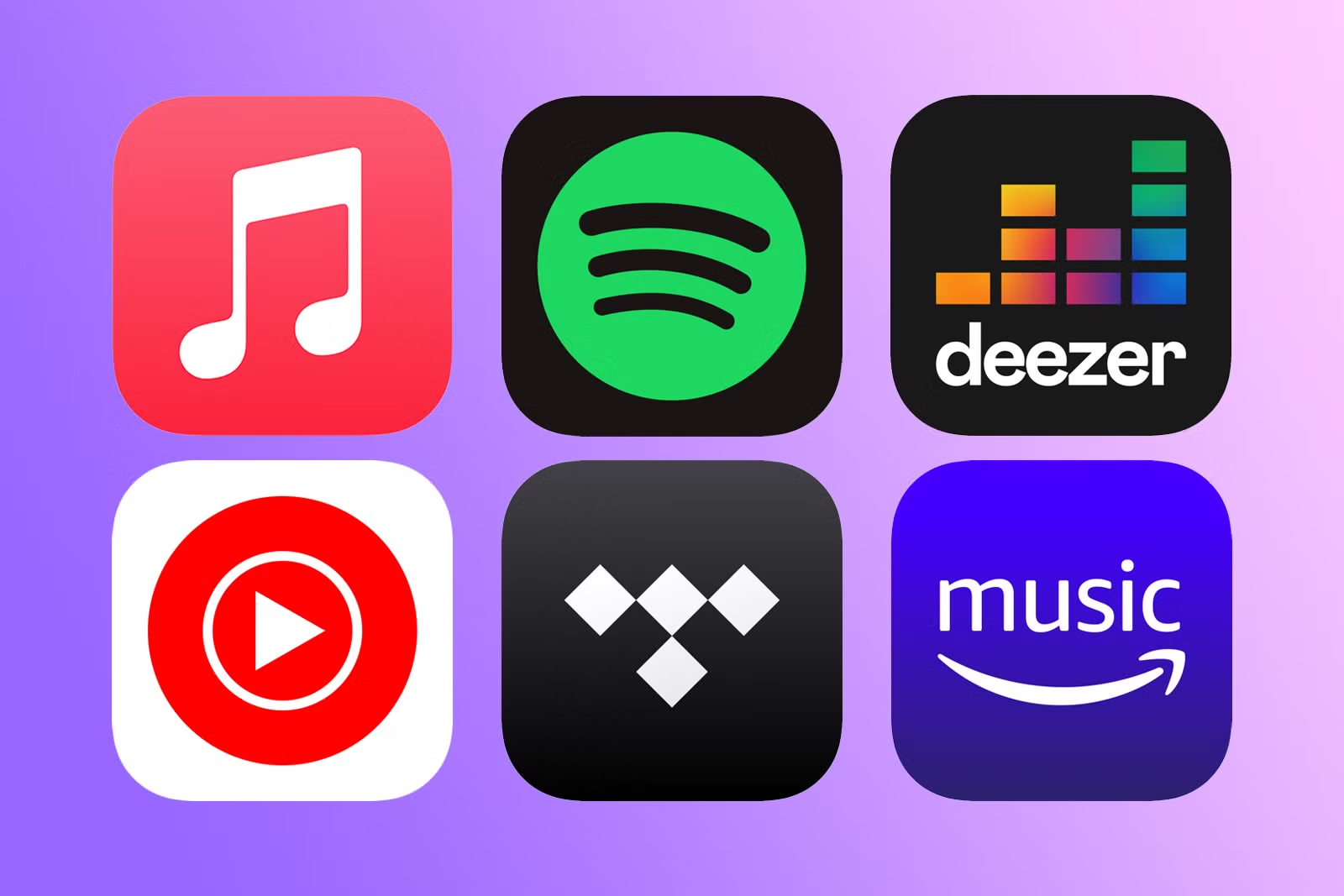
Music has always been more than just sound — it’s emotion, memory, and identity. Yet, for decades, listening to music was limited by physical formats like cassettes, CDs, and MP3 downloads. Then came streaming — an innovation that gave people instant access to millions of songs at the tap of a finger. Among the many streaming platforms in the United States, Spotify stands as the pioneer and powerhouse. It didn’t just change how people consume music; it changed the very fabric of the global music industry. With over 600 million monthly users worldwide (and over 100 million in the U.S.), Spotify is the most popular music streaming service on Earth. Its blend of technology, personalization, and community makes it the #1 platform for music streaming in the USA.
The Origin Story
Spotify was founded in 2006 in Stockholm, Sweden, by Daniel Ek (former CTO of Stardoll) and Martin Lorentzon (co-founder of Tradedoubler).
At the time, music piracy through services like Napster and LimeWire was destroying the music industry’s revenue. People wanted instant, free access to songs, but artists and record labels were losing billions.
Ek and Lorentzon envisioned a legal alternative to piracy — a platform that was faster and easier than stealing music.
In 2008, Spotify officially launched in Sweden. By offering:
- Free ad-supported streaming
- Paid premium subscriptions for ad-free listening
- High-quality audio
…it quickly became a sensation.
Spotify arrived in the United States in 2011, signing deals with all major record labels. Its simple interface, vast library, and “freemium” model transformed how Americans discovered and listened to music.
Business Model and Structure
Spotify operates on a freemium model, combining accessibility with monetization.
A. Free Tier
- Supported by ads.
- Users can shuffle-play songs with limited skips.
- Lower sound quality (up to 160 kbps).
- Access to playlists and podcasts with occasional ads.
B. Premium Tier
- $10.99/month (Individual) — Ad-free, offline downloads, and full song control.
- $14.99/month (Duo) — For two users living at the same address.
- $16.99/month (Family) — Up to 6 users with parental controls.
- $5.99/month (Student) — Discounted plan with free Hulu access (in the U.S.).
Spotify also offers HiFi (lossless audio), rolling out progressively since 2024.
This dual-tier system lets users choose between free accessibility and premium quality, balancing user growth and profit.
Spotify’s Music Library and Content
Spotify boasts over 100 million songs, 6 million podcasts, and thousands of audiobooks (new in 2024).
A. Music
Includes every major and indie label across genres — pop, hip-hop, jazz, classical, rock, EDM, country, etc.
New songs are added daily, often premiering simultaneously with global releases.
B. Podcasts
Spotify’s investment in podcasting has been revolutionary:
- Acquired Anchor, Megaphone, and Gimlet Media.
- Exclusive shows like The Joe Rogan Experience, Call Her Daddy, and Science Vs.
- Became the #1 podcast platform in the world by 2023.
C. Audiobooks
Spotify integrated audiobook access into Premium plans, targeting competitors like Audible.
User Experience and Design
Spotify’s success is deeply tied to its elegant, intuitive design.
A. Personalized Home Screen
Curates playlists and recommendations based on listening habits.
B. Playlists and Discovery
Spotify’s playlists are cultural icons — from RapCaviar and Today’s Top Hits to mood-based collections like Chill Hits and Morning Coffee.
Algorithmic playlists like:
- Discover Weekly — personalized mix updated every Monday.
- Release Radar — new tracks from followed artists.
- Daily Mixes — themed around user’s favorite genres.
These features make Spotify feel like a personal DJ that knows your mood.
C. Cross-Platform Sync
Available on all devices — smartphones, computers, smart TVs, game consoles, and car systems.
Features like Spotify Connect allow seamless transitions between devices.
D. Lyrics and Visuals
Real-time synced lyrics, background videos (“Canvas”), and album visuals enhance immersion.
Technology and Data Science
Spotify isn’t just about music — it’s powered by some of the most advanced AI and machine learning systems in the digital world.
A. Recommendation Engine
Spotify analyzes billions of data points — from listening time to skips, saves, and playlists — to predict what users will love.
This “taste profile” system has become the gold standard for personalization in digital media.
B. Big Data and Analytics
Spotify processes 70+ terabytes of data daily, using it for:
- Playlist optimization
- Regional trend prediction
- Artist marketing insights
C. AI DJ (Launched 2023)
A voice-guided virtual DJ that introduces songs, reads your taste patterns, and mixes tracks in real-time.
It’s like having a human radio host — powered by AI.
D. Sound Quality
Up to 320 kbps streaming for Premium users, with HiFi lossless audio expansion expected to rival Apple Music.
A. Democratization of Music
Independent artists can now upload directly via Spotify for Artists, bypassing traditional labels.
This has created a new generation of self-made stars.
B. Data-Driven Success
Artists can track real-time listener analytics — helping them plan tours, releases, and marketing strategies.
C. Streaming Royalties
While some criticize Spotify for low payouts (averaging $0.003–$0.005 per stream), it still generates billions in artist revenue annually.
By 2025, Spotify has paid over $45 billion to rights holders since launch.
D. Playlist Culture
Getting featured on a major Spotify playlist can launch an unknown artist into global fame overnight.
Cultural Significance
Spotify has become a cultural mirror of modern life.
- The annual Spotify Wrapped campaign — personalized year-end listening summaries — has become a global social media ritual.
- Playlists are now emotional diaries — people curate for workouts, heartbreaks, study sessions, and weddings.
- Spotify helps bridge generations and geographies: a teenager in Texas can instantly discover Afrobeats from Nigeria or K-pop from Seoul.
The platform doesn’t just stream music; it shapes cultural identity.
Strengths and Limitations
Strengths
- Largest music catalog in the world.
- Unmatched personalization and recommendations.
- Seamless interface across devices.
- Global community and shareable playlists.
- Robust podcast and audiobook integration.
- Free access with reasonable ad model.
- Continuous innovation (AI DJ, HiFi audio, cross-device sync).
Limitations
- Artist royalty rates still debated.
- Some content geo-restricted by region.
- Occasional algorithm bias toward major labels.
- Offline downloads limited to Premium users.
- Heavy competition from Apple Music and YouTube Music.
Competitors in the U.S. Music Streaming Market
| Platform | Core Strength | Weakness |
|---|---|---|
| Spotify | Best personalization & playlist culture | Lower artist payouts |
| Apple Music | High-quality sound, ecosystem integration | No free tier |
| YouTube Music | Music + videos | Ads on free tier |
| Amazon Music | Prime bundle perks | UI less intuitive |
| Tidal | Artist-friendly, high-fidelity sound | Smaller user base |
The Future of Spotify
Spotify continues to evolve beyond a music app — it’s becoming an audio ecosystem.
A. AI and Personalization
Next-gen algorithms will predict moods, daily routines, and life events, creating “soundtracks” tailored to each user’s life.
B. Expansion into Live Audio
Spotify is testing interactive live shows and concert streaming.
C. Immersive Audio and AR
Spatial and augmented-reality audio experiences are being developed for smart headphones and VR platforms.
D. Creator Economy Tools
Spotify for Artists 2.0 gives musicians advanced tools for marketing, merchandise, and fan engagement.
E. Sustainability
Spotify aims for net-zero carbon emissions by 2030 — using green data centers and eco-friendly event sponsorships.
Spotify Is the Best Music Streaming Platform in the USA
- Massive, diverse catalog: Covers every genre and language.
- Best personalization engine: No two users have the same experience.
- Global accessibility: Free and paid tiers for every budget.
- Innovative features: AI DJ, Wrapped, collaborative playlists.
- Cultural relevance: Music discovery and social sharing at scale.
- Creator empowerment: Tools for artists and podcasters alike.