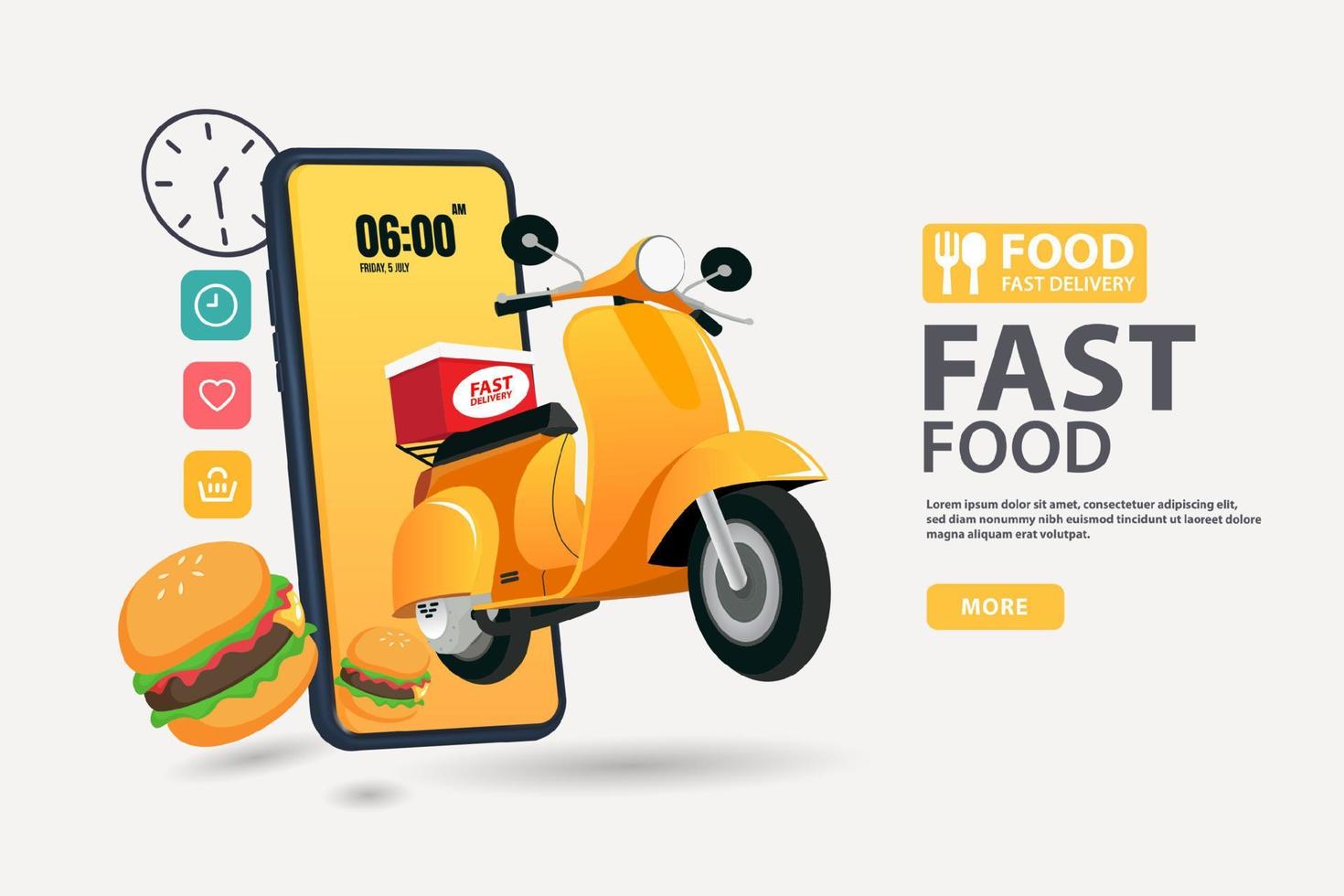
Online food delivery refers to ordering prepared meals (or in some cases groceries, convenience items) from restaurants or food vendors via a website or mobile app, with the order then delivered to your home, workplace, or another location. In the U.S., this has grown from niche to mainstream — enabled by smartphones, GPS/logistics networks, and changes in consumer behaviour favouring convenience. According to recent data, the U.S. market was valued at about US$31.11 billion in 2024, with a projected growth rate of nearly 10% annually.
By 2025, it’s estimated that over 65% of Americans will use food‑delivery services.
Players & Market Structure
Major Platforms
- DoorDash: The dominant food‑delivery platform in the U.S., with roughly 56%+ market share according to Wikipedia.
- Uber Eats: Originated from the ride‑hailing company; a strong competitor, leveraging Uber’s logistics and driver network.
- Grubhub: One of the earlier major platforms for restaurant delivery in the U.S.
- Other players include smaller or niche services (for example: ChowNow for independent/restaurants, Slice for pizzerias).
How They Operate
- Restaurant partnerships: The platforms partner with local and chain restaurants. Restaurants provide menus, pricing, and operate with or without exclusive arrangements.
- Ordering interface: Consumers browse via app/website by cuisine, restaurant, rating, price, distance, etc. Real‑time tracking and estimated delivery times are common.
- Delivery logistics: Platforms often deploy gig‑economy couriers (“dashers,” drivers) who pick up from the restaurant and deliver to the customer.
- Technology & data: Recommendation engines, surge pricing, real‑time routing, and marketplace matching are core pieces.
- Revenue & fees: Platforms charge customers delivery fees/service fees; restaurants pay commissions; couriers may be independent contractors.
Matters & Customer Value
Online food delivery fulfills multiple consumer needs:
- Convenience: No need to travel or cook — ideal for busy lifestyles, remote work, etc.
- Choice & variety: Access to local independents and national chains through one app.
- Tracking & transparency: Real‑time status updates give visibility into delivery.
- Expanded reach for restaurants: For many eateries, delivery enables new revenue streams and extends their market beyond walk‑in customers.
- Lifestyle & social trends: Delivery is not just about full meals; people order snacks, late‑night food, group orders, special occasions. A statistic noted that “78% of consumers view delivery as self‑care.”
Challenges & Criticisms
Despite its growth, the model has significant issues:
- High commissions & fees: Restaurants often complain that delivery platforms take large commissions (sometimes 15‑30% or more) which cut into margins.
- Surge/peak pricing: Fees for customers may swell during busy hours; this can reduce satisfaction.
- Delivery cost & logistics: Ensuring food arrives hot, correct, and in time is a complex logistic challenge. Longer distances mean more cost.
- Impact on restaurants: Some restaurants feel they lose customer data and direct relationship when orders go through third‑party apps.
- Worker rights & classification: The gig‑economy nature of couriers raises questions about labor rights, classification, benefits, etc.
- Market concentration & competition: Dominance by a few large players can limit options and increase costs for smaller restaurants.
- Quality & authenticity: Over‑reliance on apps may shift focus from dine‑in experience; some users feel local restaurants take a hit.
Technology & Innovation Trends
Routing & Efficiency
Platforms invest heavily in routing optimizations, dispatch algorithms, and matching couriers to orders quickly. For example, multi‑delivery models and path‑sharing can reduce cost and time.
Recommendation & Discovery
Apps use machine learning to suggest restaurants/dishes based on history, time of day, location, and preferences. This helps surface new restaurants and retains users.
Expansion Beyond Just Meals
Many platforms now deliver groceries, convenience items, alcohol, and even household goods. For instance, DoorDash offers convenience/grocery in some markets.
Drone & Autonomous Delivery
Some services are testing drone or autonomous vehicle deliveries. In a recent move, Uber Eats announced plans for U.S. drone delivery with Flytrex.
Partnerships & Ecosystem Moves
Platforms form alliances to broaden reach. For example, Uber Eats partnered with Instacart to provide restaurant delivery in the Instacart app.
Local & Indie Models
Beyond the big national platforms, there are independent/“local” delivery platforms that prioritize community, fairer rates for restaurants and couriers, and hyper‑local service.
Market Dynamics & Future Outlook
- The U.S. food‑delivery market continues to grow strongly. Projections show potential to reach US$72.94 billion by 2033 under current growth rates.
- Penetration: The share of consumers using delivery services is rising — by 2025 two‑thirds of Americans may use them.
- Urban & suburban coverage: While early adoption was urban‑centric, platforms are increasingly extending into suburbs and less dense markets.
- Diversification: Delivery services may morph into “everything delivery” platforms (food, groceries, retail) to maximize courier utilization and revenue.
- Regulation & labor: As gig worker rights, city regulations, tipping transparency, and worker classification evolve, business models will need to adapt.
- Sustainability & cost containment: With pressure on margins from restaurants, customers, and logistics, efficiency gains (via technology) and value packaging (subscriptions, memberships) will be key.
Important for Restaurants & Consumers
For Consumers
- Additional revenue stream: Especially important if dine‑in foot traffic is limited.
- Marketing reach: Platforms help bring new customers, especially via search/discovery.
- Data insights: Some platforms provide analytics on order patterns, though some restaurants feel limited access.
- Logistics burden: Some restaurants can focus on kitchen, while the platform organizes delivery — though at a cost.
For Economy & Culture
- Employment: Thousands of delivery drivers/riders earn income via gig work.
- Small business enablement: Smaller/local restaurants can compete for delivery orders more easily.
- Lifestyle shift: Delivery has become embedded in everyday life — from lunch at home, movie night dinners, to group orders.
- Innovation: The industry drives logistics, AI, mapping, mobile‑app tech, and “on‑demand” culture.
- Urban planning & logistics: Makes an impact on traffic flows, courier behaviour, and local neighbourhood business ecosystems.
Strengths & Weaknesses
Strengths
- Ubiquitous access to food from many restaurants.
- Strong user experience: mobile apps, tracking, flexible payments.
- Rapid growth and scalability for platforms.
- Innovation in logistics, customer choice, and new categories.
Weaknesses
- High cost for restaurants and potentially for consumers (fees, mark‑ups).
- Dependence on external platforms can erode direct customer relationships for restaurants.
- Logistical complexity: food quality/departure time/courier availability may vary.
- Worker concerns: gig‑driver classification, tipping transparency, rate of pay.
- Market concentration: dominance by a few large players might limit competition, force higher fees.
The Future Landscape
Looking ahead, several developments are likely:
- Subscriptions/Memberships: Models offering unlimited/discounted delivery (e.g., DashPass) will grow as customers look for cost savings.
- Autonomous delivery: Drones, robots, and vehicle automation may reduce courier cost and speed up delivery times.
- Personalization & integration: Delivery apps may integrate meal kits, grocery, and restaurant orders into one ecosystem.
- Sustainability: Reducing packaging, optimizing routing, and using greener transport will become increasingly important.
- Localisation & community platforms: More local/regional platforms may thrive by offering better terms to restaurants, deeper community ties, and differentiation from “big‑platform” behaviour.
- Regulation & fairness: Expect new rules around gig workers, tipping transparency, and platform‑restaurant relationships to shape service models.
- Data & experience enhancements: Real‑time tracking, AR previews, integrating with smart homes/devices, and richer food discovery will enhance the experience.