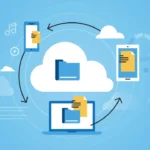
In today’s digital era, data is one of the most valuable assets for individuals, businesses, and governments. From personal photos and documents to enterprise databases and critical applications, the volume of data generated in the U.S. is growing at an exponential pace. Traditional physical storage methods, such as hard drives and on-premises servers, are increasingly insufficient, expensive, and prone to failure. Cloud storage has emerged as a transformative solution, enabling users to store, access, and manage data over the internet securely and efficiently. By 2025, cloud storage is not just a convenience—it is a critical infrastructure for business continuity, remote work, and digital innovation in the United States.
Definition and Core Concept
Cloud storage refers to the practice of storing data on remote servers that are managed by third-party providers and accessed via the internet. Unlike local storage, cloud storage provides:
- Scalability: Users can expand storage space on-demand.
- Accessibility: Data is accessible from any device with internet connectivity.
- Redundancy: Multiple copies are stored across different servers, reducing data loss risk.
- Cost Efficiency: Users avoid heavy upfront investments in physical hardware.
The underlying technology relies on distributed computing, virtualization, and advanced networking. Providers maintain large data centers across multiple locations to ensure reliability and low latency.
Key Types of Cloud Storage
Cloud storage can be categorized into three primary types, each with unique use cases:
A. Public Cloud Storage
- Managed by third-party companies like Amazon Web Services (AWS), Google Cloud, and Microsoft Azure.
- Users share infrastructure with other clients but benefit from elasticity, cost-effectiveness, and minimal maintenance.
- Popular for startups, SMBs, and enterprises needing large-scale storage without building their own infrastructure.
B. Private Cloud Storage
- Hosted on-premises or by a dedicated provider for a single organization.
- Offers enhanced security, customization, and compliance.
- Ideal for industries with sensitive data requirements, such as healthcare, finance, and government.
C. Hybrid Cloud Storage
- Combines public and private cloud solutions.
- Critical data remains on private servers, while less-sensitive data is stored in the public cloud.
- Enables cost optimization, scalability, and data security simultaneously.
Leading Cloud Storage Platforms in the USA
The U.S. is home to the world’s largest cloud storage providers:
A. Amazon Web Services (AWS) S3
- AWS S3 is highly scalable object storage used by millions of businesses.
- Key features include versioning, lifecycle management, encryption, and integration with other AWS services.
- Popular with enterprises for big data analytics, website hosting, and backup solutions.
B. Google Cloud Storage
- Offers durable, low-latency object storage for individuals and businesses.
- Integrated with AI and machine learning tools, making it ideal for analytics and data-driven applications.
- Features nearline and coldline storage for cost-efficient long-term data retention.
C. Microsoft OneDrive and Azure Blob Storage
- OneDrive focuses on personal and small business file storage, with tight integration into Microsoft 365.
- Azure Blob Storage caters to enterprise-scale applications, offering advanced data redundancy and encryption.
D. Dropbox
- Known for user-friendly interface and seamless file syncing across devices.
- Targeted at individuals, freelancers, and SMBs.
E. iCloud
- Apple’s cloud storage platform is heavily integrated into macOS and iOS devices, providing automated backup and synchronization.
Each platform differentiates itself through target audience, security protocols, pricing, and ecosystem integration.
Key Features of Cloud Storage
A. Accessibility and Collaboration
- Files can be accessed globally from multiple devices.
- Real-time collaboration tools like shared folders, commenting, and simultaneous editing improve productivity, especially in remote work environments.
B. Scalability
- Organizations can increase storage capacity instantly without physical hardware purchases.
- Supports elastic computing, accommodating fluctuating workloads.
C. Backup and Disaster Recovery
- Cloud storage reduces the risk of data loss due to hardware failure, natural disasters, or cyberattacks.
- Automated backups, replication across regions, and version history ensure business continuity.
D. Security
- Features include encryption at rest and in transit, multi-factor authentication, and intrusion detection.
- Providers often comply with U.S. regulations such as HIPAA, GDPR (for international clients), and CCPA.
E. Integration
- Seamlessly integrates with applications like email services, CRM systems, data analytics platforms, and AI tools.
- Supports APIs for customized workflows and automated processes.
Business Models
Cloud storage providers primarily generate revenue through:
A. Subscription-Based Plans
- Tiered plans based on storage volume, data transfer limits, and additional features.
- Examples: Google Drive offers 15 GB free, then paid plans up to multiple terabytes.
B. Enterprise Licensing
- Large organizations pay for custom contracts with dedicated support, compliance guarantees, and service level agreements (SLAs).
C. Pay-as-You-Go
- Users pay for actual storage and usage, promoting cost efficiency for fluctuating workloads.
D. Value-Added Services
- AI analytics, machine learning integration, enhanced security, and archiving options often increase revenue per user.
Technological Infrastructure
Cloud storage relies on cutting-edge infrastructure:
- Data Centers: Distributed across multiple U.S. regions for redundancy and low-latency access.
- Virtualization: Maximizes resource utilization and isolates user environments.
- Object Storage: Efficiently stores unstructured data like images, videos, and logs.
- APIs and SDKs: Enable developers to integrate cloud storage into applications seamlessly.
- Automation and AI: Predictive resource allocation, anomaly detection, and intelligent caching improve performance and cost-efficiency.
Economic and Cultural Impact
A. Enterprise Transformation
- U.S. companies, from startups to Fortune 500 firms, rely on cloud storage to modernize operations, reduce IT costs, and enhance agility.
B. Remote Work Enablement
- Cloud storage has been critical for distributed teams, enabling real-time collaboration and file sharing during the remote work surge post-2020.
C. Data Democratization
- Individuals and small businesses can store, analyze, and access data without investing in physical servers, leveling the playing field.
D. Environmental Considerations
- Centralized data centers optimize energy efficiency, though the growing scale of cloud infrastructure raises concerns about carbon footprint, prompting U.S. providers to invest in renewable energy and green computing.
Security and Privacy Challenges
While cloud storage offers advanced protections, challenges remain:
- Data Breaches: Misconfigured storage buckets and weak credentials remain vulnerable.
- Ransomware Attacks: Cloud data can be encrypted by malicious actors if security measures are insufficient.
- Regulatory Compliance: Companies must adhere to strict U.S. data privacy laws and industry-specific regulations.
- Third-Party Dependence: Businesses rely on providers for uptime, maintenance, and data integrity.
Providers combat these risks through zero-trust architecture, AI-driven monitoring, and end-to-end encryption.
Emerging Trends in the USA
A. AI and Cloud Storage Integration
- AI automates data classification, anomaly detection, and predictive storage management.
B. Edge Computing
- Storage closer to the user reduces latency, essential for IoT devices, autonomous vehicles, and real-time applications.
C. Hybrid and Multi-Cloud Adoption
- Organizations combine multiple cloud providers to prevent vendor lock-in and optimize costs.
D. Environmental Sustainability
- Major U.S. providers commit to carbon neutrality, water conservation, and green energy-powered data centers.
E. Advanced Security Protocols
- End-to-end encryption, blockchain-based authentication, and AI-driven threat detection are becoming standard.
Leading Cloud Storage in the U.S. Market
| Provider | Strength | Target Audience | Unique Feature |
|---|---|---|---|
| AWS S3 | Enterprise-grade scalability | Large enterprises | Integration with AI, big data analytics |
| Google Cloud Storage | Data analytics, AI | SMBs and large companies | Nearline & coldline for cost-effective storage |
| Microsoft OneDrive / Azure | Office 365 integration | Personal and enterprise | Seamless Microsoft ecosystem integration |
| Dropbox | User-friendly interface | Individuals & SMBs | File synchronization and collaboration |
| iCloud | Apple ecosystem integration | Consumers | Automatic backups across iOS/macOS devices |